


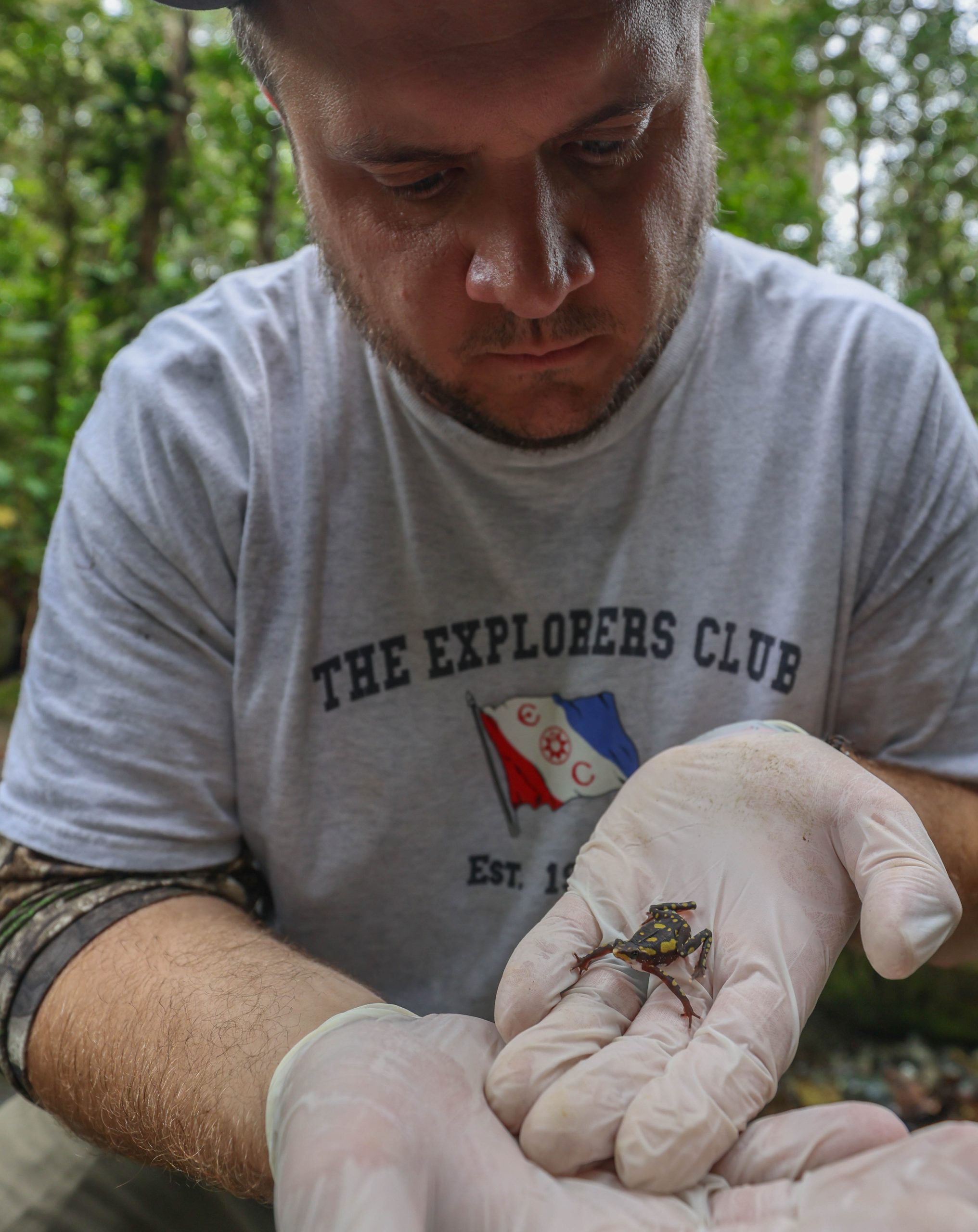
Justin Elden is the Curator of Herpetology & Aquatics, Director – Center for Ecuadorian Amphibian Conservation, Director – Center for Conservation in Western Asia, Director – Ron and Karen Goellner Center for Hellbender Conservation, and Commission Member, IUCN Viper Specialist Group for the Saint Louis Zoo.
My personal mission is complex, yet simple: to explore and protect the world’s highlands, islands, caves and creeks. As the Curator of Herpetology & Aquatics at the Saint Louis Zoo, I get to live that mission every day. Through the Zoo’s conservation branch, the Saint Louis Zoo
WildCare Institute, I also serve as Director for several of our global field conservation projects, overseeing research, breeding programs and reintroduction efforts. One of these projects that has always held a special place in my heart is our work in Ecuador, home to some of the planet’s
most extraordinary, and most imperiled, amphibians.
Ecuador may be small in size, but it is a global powerhouse of amphibian diversity, boasting over 600 documented species and one of the highest concentrations of amphibians per square kilometer in the world. This extraordinary diversity is fueled by the country’s remarkable
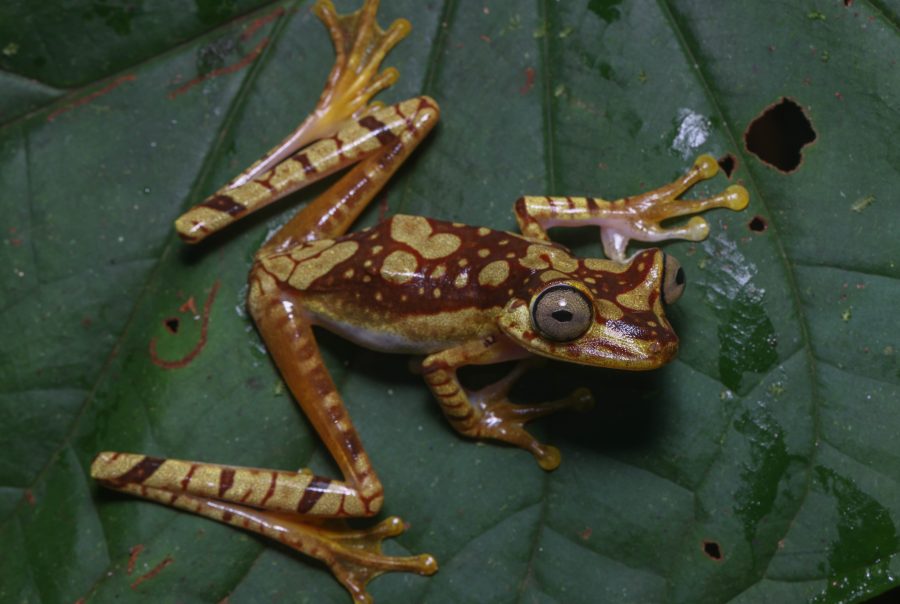
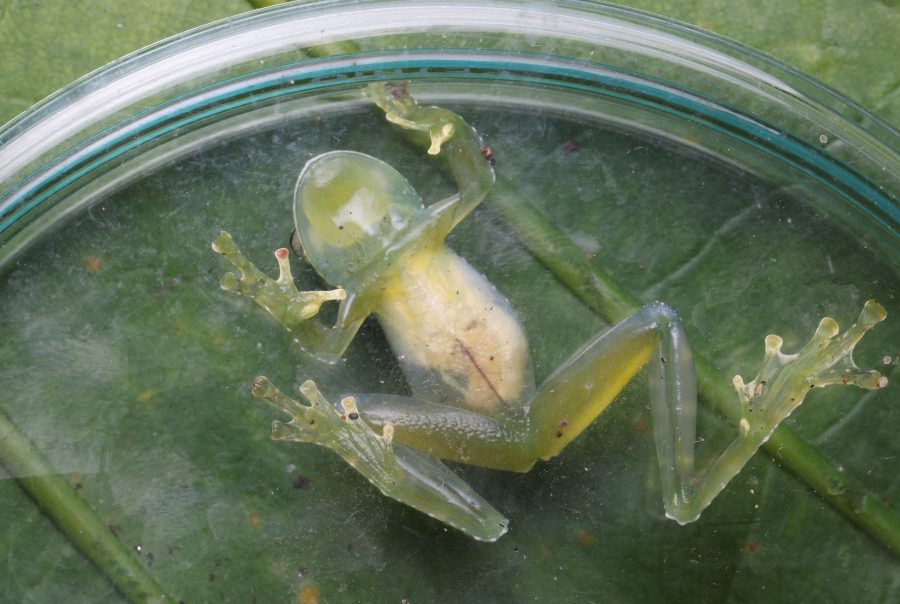
topography and range of ecosystems. From the towering Andes to the lush Amazonian lowlands, the Pacific coastal forests and the Chocó rainforest, Ecuador’s mountains, valleys and waterways create countless ecological niches. These microhabitats have driven high rates of endemism, producing species found nowhere else on Earth. Ecuador hosts a stunning array of amphibians,
from the jewel-like poison dart frogs (Dendrobatidae) of cloud forests to torrent-dwelling stream frogs (Hylodidae and Centrolenidae) and the cryptic caecilians (Gymnophiona) burrowing in moist soils, each adapted to its own unique environment.
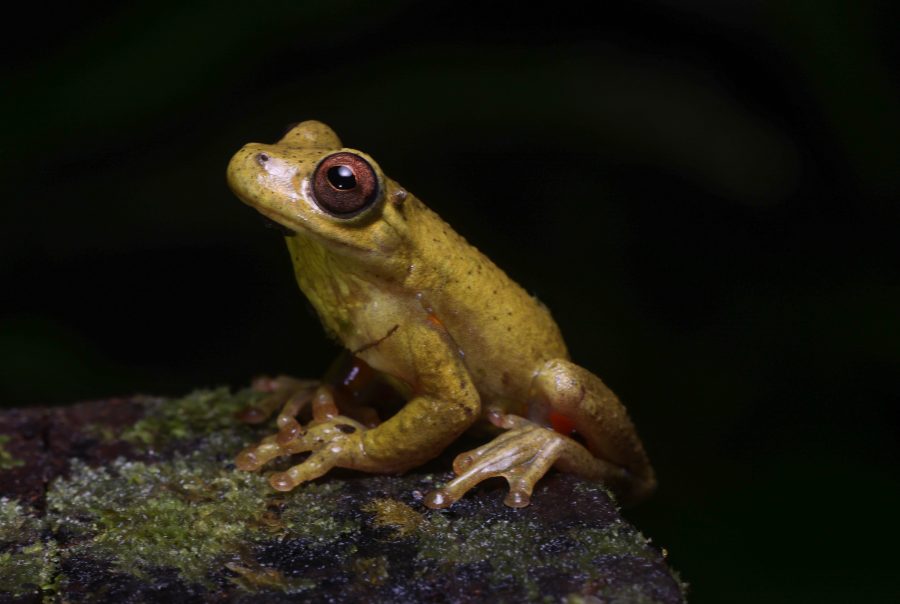
Yet this dazzling diversity comes with immense fragility. Habitat destruction from agriculture, illegal mining, logging and infrastructure development has fragmented forests and polluted rivers, putting these specialized species at risk. Compounding these threats is the chytrid fungus (Batrachochytrium dendrobatidis), a deadly pathogen that has wiped out amphibian populations worldwide, including many of Ecuador’s endemic species. Today, over 60 percent of Ecuador’s amphibians are threatened with extinction. Traveling through even the country’s most remote regions, it is sobering, and increasingly common, to encounter forests once alive with the chorus of frogs, now eerily silent, a stark reminder of how vulnerable these ecosystems and their extraordinary inhabitants have become.
For nearly two decades, the Saint Louis Zoo WildCare Institute Center for Ecuadorian Amphibian Conservation has partnered with Centro Jambatu, an Ecuadorian organization dedicated to amphibian research and conservation. Centro Jambatu maintains state-of-the-art laboratories for breeding critically endangered frogs and conducts fieldwork to understand species’ ecology, habitat requirements and threats. I’ve been privileged to witness this long-term
collaboration evolve and succeed, from early breeding programs to now supporting complex reintroduction projects. Watching science and conservation come together in real time, surrounded by the sounds of rainforest life, is both humbling and inspiring.
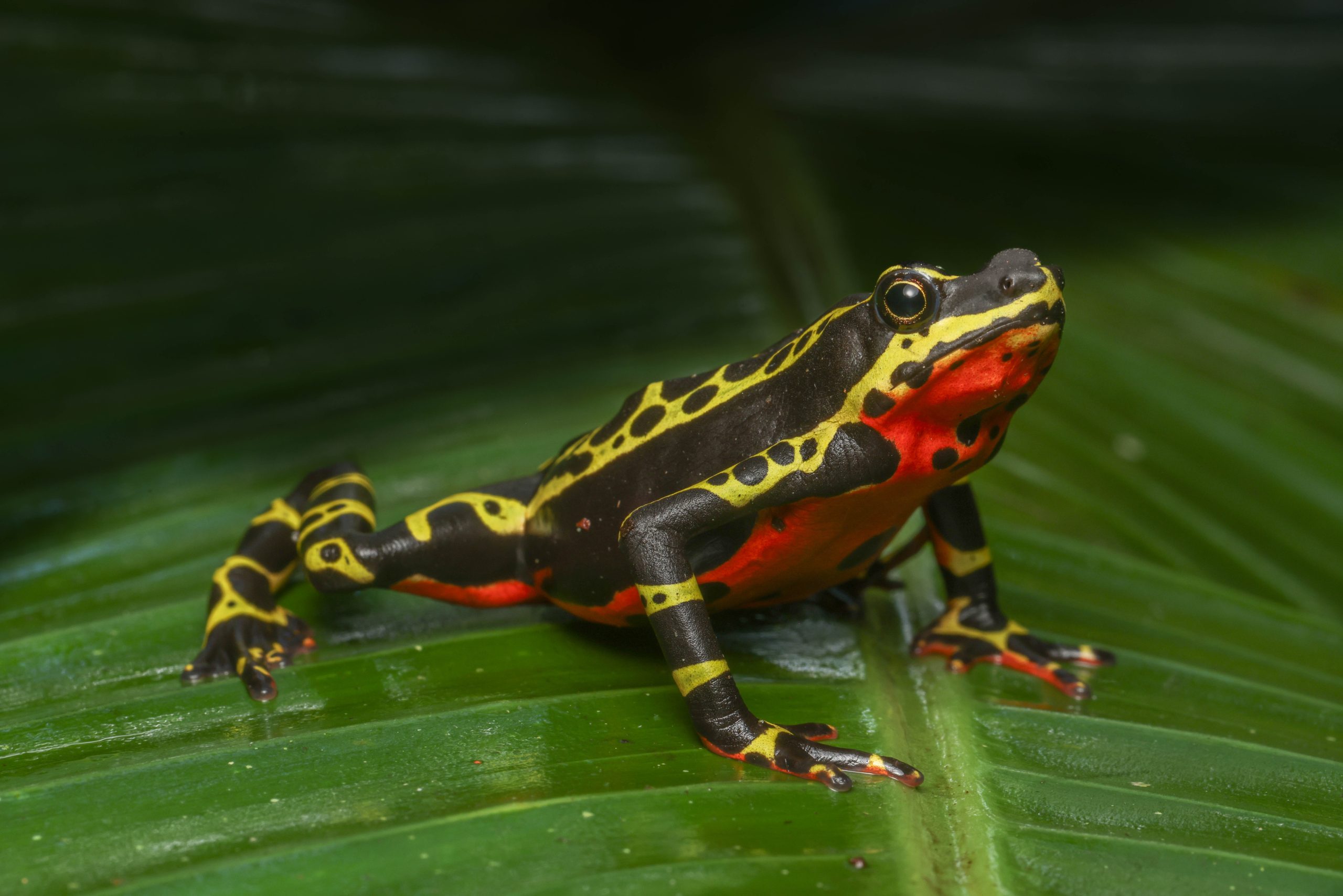
In August 2025, I traveled to Ecuador with my colleagues from the Saint Louis Zoo to work alongside Centro Jambatu in releasing nearly 1,000 harlequin toads (Atelopus) into their native habitats. Atelopus, or harlequin and stubfoot toads, are small, vibrantly colored amphibians found primarily in Central and South America. Ecuador hosts some of the genus’ highest diversity. These species are highly specialized, occupying humid lowland and montane forests, relying on clean, fast-flowing streams for breeding. Many have very small geographic ranges and highly specific habitat requirements, which makes them extremely sensitive to environmental change.
Sadly, nearly all Ecuadorian Atelopus are critically endangered or possibly extinct. Habitat loss, pollution and chytrid fungus have pushed these animals to the brink, making every successful reintroduction critical.
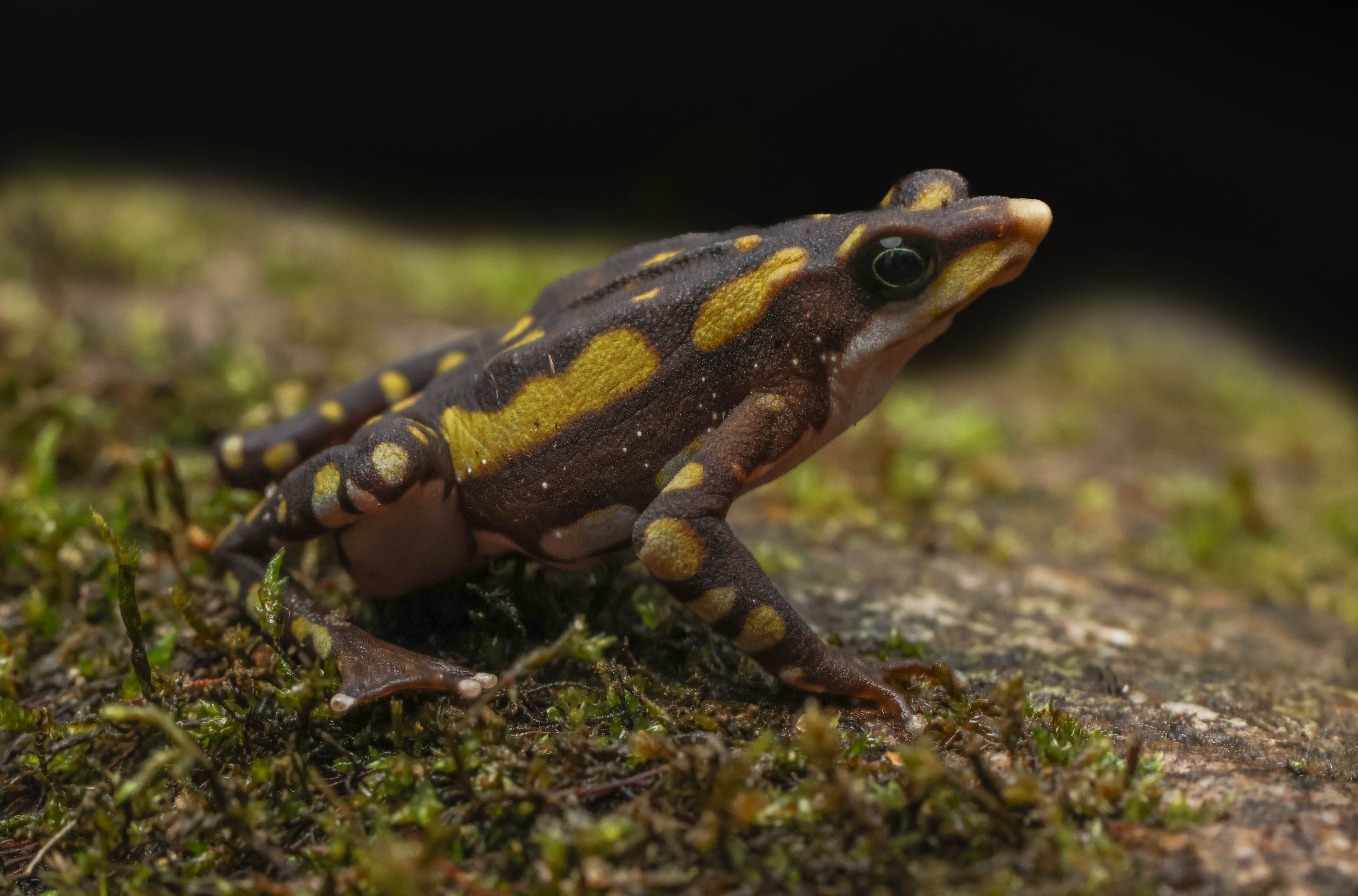
During our visit, we released two species of Atelopus, including Atelopus longirostris, the long- snouted harlequin toad, native to Ecuador’s Chocó foothill cloud forests. Once thought extinct, this species was rediscovered in 2016 thanks to the tireless efforts of Centro Jambatu, with support from the Saint Louis Zoo. These toads are among the larger Atelopus species,
distinguished by their vivid coloration and the pointed appendage on their snouts, a striking adaptation that makes them instantly recognizable in the dense rainforest.
Hiking through the Chocó rainforest, I am always amazed by its extraordinary complexity and beauty. Moss-draped trees towered over a tapestry of vines and epiphytes, while streams wind along steep ridges and valleys, providing countless microhabitats for amphibians and other wildlife. The Chocó is not only the wettest rainforest in the world but also one of the most biologically rich and endangered. Many amphibian species found here are restricted to just a few streams or ridges, making them highly vulnerable to habitat loss. Incorporating the Chocó into conservation efforts is therefore essential: protecting and restoring this region safeguards some of the rarest and most threatened amphibians on the planet, including Atelopus species, glass frogs and other cryptic, range-restricted species that are often overlooked but are ecologically indispensable. Releasing these toads required a combination of soft and hard release strategies. Individuals were acclimated in protected enclosures near streams, receiving monitoring before full release.
Individuals housed in the pens prior to our arrival also were fully released. Soft releases are particularly important for individuals bred in human care, as they allow toads to adjust gradually to natural conditions, increasing survival and ensuring the long-term success of reintroduction programs.
We also released nearly over 500 Atelopus sp. “Limon,” or Limon harlequin frogs, from the Amazon foothills east of the Andes. This species has yet to be formally described by science, yet it is already critically endangered due to habitat loss from mining. Ecuador is a hotspot for new species of amphibian, many being described regularly as scientists explore its mountains, lowlands and rainforests. Yet the excitement of these discoveries is tempered by urgency: many of these newly described frogs, salamanders and caecilians are already facing severe extinction like the Limon harlequin frog. Species may be confined to a single patch of forest, making them highly vulnerable even as they are first documented by science. The Limon Atelopus inhabits Rolling tropical hills, slowly blending into the vast Amazon rainforest, a landscape that never
gets old to see though appears ancient.
This fieldwork represents the culmination of a long-standing partnership between the Saint Louis Zoo and Centro Jambatu. Jointly, we want to make a difference for these animals and ensure they are around for generations to come. I’ve seen firsthand how this work maintains critical populations, including species that no longer exist in the wild, reinforcing the importance of proactive conservation. Being part of this effort, the science, the fieldwork and the boots-on-the- ground conservation, is both a privilege and a responsibility. Protecting endangered amphibians and reptiles is more than a professional pursuit; it is a calling, one I am honored to follow every day.
A lot of conservation happens behind a desk or under the glow of a fluorescent bulbs, writing reports, publishing papers or sharing the wonders of wildlife with Zoo visitors. But there’s another side to it, the side that puts mud on your boots and rain in your hair: exploration. You can’t save what you haven’t seen, and the first step in protecting a species is often just finding it out there in the wild.
That’s why I’m proud to be a National Fellow of The Explorers Club, carrying its spirit with me whether I’m at my desk in St. Louis or following the equator chasing frogs. For me, conservation isn’t just paperwork: it’s a journey, full of discovery, wonder and a little bit of adventure.


